• Home
  • Blog
  • Daze of Dari

Darielle Brooklyn

Darielle Brooklyn

Category Archives: Grief

The Day Suicide Became Too Personal

20 Friday Jan 2017

Posted by Darielle Brooklyn in bereavement, Family, Grief, Loss, suicide, Uncategorized

≈ 1 Comment

Tags

bereavement, Grief, Loss, sibling loss, suicide

I vividly remember the day my life came to a screeching halt. It runs through my head and rips apart my heart all too often. I remember every moment. The phone call from my Mom. The screaming. My racing heart. My body going numb and me pulling my hair to feel something other than fear and numbness. Speaking to the detective. Asking questions. Trying to listen to the answers. The what ifs. The whys. The searching. The realization that no matter what I do, I am unable to bring my brother back.

You are never prepared for the aftermath of losing a loved one. Especially when it’s a loss to suicide. No one warns you about the chaos that is about to occur in your life. No one warns you about how relationships with surviving family members change. No one can. Unless one lives it, NO ONE can warn you. They are unable to comprehend it or empathize with you.

I was having a GREAT day. It was a gorgeous spring day. The sun was shining. The windows were open. My music was blasting and I was blow drying my hair, getting ready to go shopping at a boutique I loved. It was the Tuesday after Mother’s Day. My husband and children had given me a gift certificate to the boutique and I was going to go use it. I was going to happily go on my way for a drive with my sunroof open and my music blasting on this seemingly beautiful day.

Then the phone rang. My Mom was screaming on the other end. Nothing made sense. When she uttered those horrific words, I actually responded with “no he didn’t.” I basically hung up and moments later called her back after I realized what I had just heard. I called my husband and a friend. What I said to them is a blurred memory. Everything was now blurry. My brain and my heart were trying to process this devastation. I couldn’t see from crying. My head and heart were pounding. I lost all strength. The remainder of the day was filled with phone calls you never want to make and plans you never want to deal with.

It was just shy of 7 years of the loss of my Dad. A loss that still pierced me to my core. This was something that left me completely shattered. I was desperate for answers. I needed to know why. I clung to every single thing my cousins had gotten out of his apartment and shipped to me days later. I searched. I investigated. I called everyone in his cell phone address book. I was looking for any answers. I was desperate to find pieces of him. I needed to piece him back together. I needed a rewind button. I replayed the last month of his life. It was that month that we started speaking after not speaking for eleven months. I was living an absolute nightmare.

Somehow I survived. As catastrophic as the loss is, I wake up each day with a positive attitude and live my best life. I survive the aftershocks, which still hit me. I realize that they come fast and hit hard but they do pass and I will smile again.

Many experience years they don’t remember. I am thankful that I have my children to keep me going on a daily basis. Without them to keep me focused, I’m not sure I’d have been able to be strong. They were young and they needed me. I needed to be strong for them. I still have my moments and I always will throughout my lifetime. I’ve learned to allow those moments to happen and then I reclaim my breath. I’ve accepted the fact that my heart has scars that will never heal but I’ve also realized my heart experiences a great deal of love and happiness with each new day. It is there that I shift my focus.

If you have experienced the loss of a loved one to suicide, please know that you will find your way in your own time. Be gentle with yourself and live each day the best you can as you continue to heal. It is hard to accept that a piece of you will never come back. But remember that life keeps moving forward. Because life continues to move forward, it is natural that we as humans do as well.

We are stronger than we realize and as long as we are grateful for the good, we will survive.

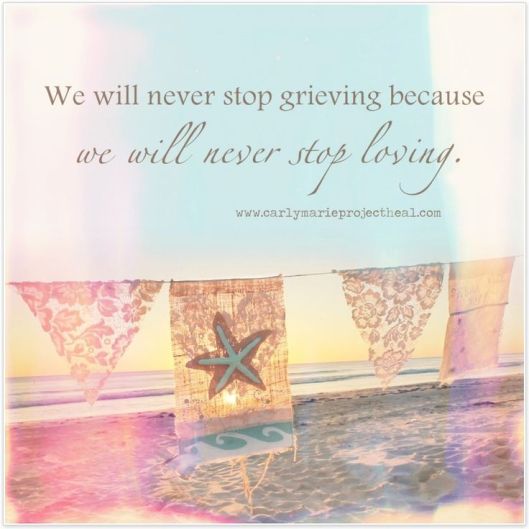
And please always remember this:

suicide.jpg


Five Annoying Words

27 Thursday Oct 2016

Posted by Darielle Brooklyn in Family, Friendship, Grief, How to, Inspiration, Uncategorized

≈ 1 Comment

Tags

Family, How to, Inspiration, life lessons, relationships

How many times have you heard these words:

Everything happens for a reason.

I believe in fate but seriously? That sentence can destroy us. It is also completely untrue. Some things, absolutely. But everything? Absolutely not!

If you have ever faced a tragedy and someone tells you that your tragedy was meant to happen or that it happened for a reason, even that it will make you a better person, you have every right to be upset and even go so far as to remove that person from your life.

Grief is brutally painful. There are so many facets to grief. Grief does not only occur when someone dies. It can occur when relationships fall apart, when opportunities are shattered, or when dreams die. It can even occur when you are struck with a serious illness.

Remember these words instead:

Some things in life cannot be fixed. Some things in life can only be carried. 

These words are poignant and they aim right at the pathetic platitudes our culture has come to embody on an increasingly hopeless level. Losing a loved one cannot be fixed. Being diagnosed with a debilitating illness cannot be fixed. Facing the betrayal of your closest confidante cannot be fixed. These things certainly did not happen for a reason.  They damn well cannot be fixed! These things can only be carried.

Sometimes devastation can lead to growth, but the truth is, it often doesn’t. The reality is that devastation more often destroys lives. And the true calamity is that this happens because we choose to replace grieving with advice.

After living through traumatic devastation, I choose to and now live an extraordinary life. I’ve been greatly blessed by those in my life, the opportunities I’ve had and the life I’ve built for myself and for my family. Loss has not made me a better person. Sadly, in some ways, it has hardened me.

I have always been a very loving and caring person. My losses have made me even more aware and empathetic of the pain of others. On the other hand, I also have a more cynical view of some and have developed impatience with those who are unfamiliar with what loss does to people. It’s true that you don’t get it until you live it but there are some that don’t even try to understand it. It can be quite frustrating.

I’ve had people tell me to “get over it,” or  that those who passed away “would want you to be happy.”

I am happy.  I have sad moments.  People don’t “get it.”

If anyone tells you that all is not lost, that your situation happened for a reason, or even that you’ll become better as a result of your pain, you may want to choose to let them go.

I’m not saying you should. That is entirely to decide. It isn’t an easy decision to make and should be made carefully. The fact is that you can.

The ones who helped were those who were there when I needed them. And said nothing.   They were just there. But in those moments, they did everything.

I am alive and I survived because of my deep love for my family. I survived and because of those who chose to love me and help me.  When you are loved in silence, when people suffer with you, when they watch you in your darkest moments and see you emotionally destroyed and they love you through it, you survive.

When a person is devastated by grief, the last thing they need is advice. Their world has been shattered. At this time, we can acknowledge their pain and let them know that we are there with them. It is important to be with your loved one, suffer with them, listen to them, but please do not give them advice.

Acknowledging someone is powerful. It requires no education, training or skills.  All you need to do is to simply be present as long as is necessary, comforting the wounded soul of your loved one.

Be there. Do not leave when you feel uncomfortable or when you feel like you’re not doing anything to help. Because it is then – in the shadows of horror –  where healing is truly found. When others are willing to enter that sacred space with us, it is very powerful and very healing.

Be one of these people.  Unfortunately, one day you will find yourself in need of one of these people. Find them. They will help you heal and not try to fix you with advice.  They will help you carry your pain. These people are keepers.

Fate. Be that person and when you need them, they will be that person for you. That can happen for a reason.


Surviving the Loss of Your Adult Sibling

16 Wednesday Mar 2016

Posted by Darielle Brooklyn in bereavement, Grief, Uncategorized

≈ Leave a comment

Tags

bereavement, death, death of a sibling, Grief, Loss, sibling loss

439e1629eb0ff3320074ab973ab5ce95.jpg

The most neglected loss in adult life is that of the death of a sibling. Though many of us will face this loss, society believes that the loss of a sibling during our adult life has little to no disruptive effect on surviving brothers and sisters. This couldn’t be further from the truth! The loss has significant meant and mourning the loss can be very difficult.

A relationship between siblings has unique and very special characteristics. Much research has been conducted and it has been concluded that brothers and sisters greatly influence each other with regards to identity, self-concept and personality. The sibling relationship is more complex than most other relationships. There is a mixture of affection and ambivalence, camaraderie and fierce competition. There is no one else who knows us better other than our parents and, just like our parents, our siblings have been there from the very beginning. However, unlike our parents, our siblings are people we assume will be part of our lives for the rest of our lives. In terms of the span of time, the intimacy, and the shared experience of childhood, no other relationship rivals the connection we have with our adult brothers or sisters. From bullies in school to teenage broken hearts, from careers to marriage to unfulfilled dreams, our siblings have been there through all of it. They were beside us through our journey through time. Our siblings are our keeper of secrets, they are our first friends as well as our rivals for our parents’ affections. They are  a secure and familiar constant in an often precarious and uncertain world.

The loss of a sibling in adulthood is the loss of someone who shared your childhood history with you. Your sibling was a major part of your past and is part of the roots to your past. Your sibling shares common memories as well as critical childhood experiences and family history. For this reason when you lose a sibling, you also lose one of your major connections to your past.

Your sibling knew you in a different way, a way those who know you as an adult will never understand.  Consequently and unfortunately, a constant is gone. This can cause you to feel anxious and insecure. Even if you didn’t have constant contact with your sibling, you still had the security of knowing another member of your family was there. Your sibling has a symbolic spot in your life even if they weren’t part of your day-to-day life.

When you lose a sibling in adulthood, it can make you feel older and cause you to see that your family is dwindling. Sometimes this may cause the surviving sibling to be concerned about their own death if they lost their sibling to an illness or disease.

Mourning after the loss of a sibling can be complicated. The ambivalence that is normally present in a sibling relationship may bring on guilt and guilt in turn, will complicate mourning.

Depending on the relationship, you may feel guilt and regret if the relationship was not what you had always wished it would be. There may be guilt because you feel you did not spend enough time together or that you argued too often. Many siblings experience survivor guilt especially when they remember times that they wished their sibling would just disappear.

The adult who loses a sibling shares many similar issues with parents who lose adult children. You may find you do not have much part in decisions pertaining to the death and the funeral. The lack of control is combined with the failure of others to recognize that you too are profoundly bereaved. Much of the attention will go to the deceased’s parents, spouse and children.

How many times did I personally hear “I’m so sorry to hear about your brother. How is your Mom?” Or “You need to be strong for your Mom. She is hurting so bad and needs you so much right now.” These are just a couple of unhelpful and quite honestly, hurtful things that bereaved siblings often hear. People tend to give their focus of their sympathy to the surviving parents, spouse or children. They often ignore the grief of the sibling. Siblings are unfortunately overlooked in their own heartache and grief. Do you realize there are actually more books on losing a pet than losing a sibling?

Adult siblings often suppress their grief. They immediately fall into the role of caregiver for their surviving parents or for the sibling’s spouse and children. Adult siblings sense a loss deep within the core of their being. Siblings after all, are the lens that we look through often to see our childhood. Many adults admit that no one inside or outside of their family recognized this.

When grief is delayed or suppressed, often due to falling into these roles, mourning also gets delayed and suppressed. No one gets to skip mourning. You either need to complete the grief work or risk getting stuck or frozen in your grief. The latter may cause significant consequences, such as anxiety, depression or illness.

If your sibling lived in another state, it may be extremely difficult to accept their death since there is no acute absence to signal that he or she is permanently gone. This will even further complicate grief.

Death of a sibling changes family roles and relationships. This can greatly cause additional losses or extreme stress. The death may change your position in the family. You now may be the eldest and expected to care for your parent. You may have instantly become an only child, or both.

The fact is when a sibling dies, you lose both the past and the future. When you lose your sibling, you grieve for what was in the past and you grieve for what should have been the future.

My brother’s death shook me to my core but I choose to live each day to its fullest. Perhaps I am strong but the truth is my brother’s loss will remain with me for my entire life, just like he was supposed to.

Please remember you are not alone and you are not forgotten. Just like me, you will carry your sibling with you throughout your life. They will forever remain in our hearts, thoughts and memories.

I am deeply sorry for your loss.


You-are-forever-in-my-heart.jpg

The Waves of Grief

04 Friday Mar 2016

Posted by Darielle Brooklyn in Grief, Inspiration, Uncategorized

≈ 1 Comment

Tags

bereavement, Grief, healing, heartbreak, Loss


silent_ocean_waves_219841_by_crysis328-d6raklt.jpg

Can you imagine someone you love, that you spent so much of your life with and were wholeheartedly bonded to, being taken away from you so unexpectedly? Can you imagine being so blindsided and left in a complete daze from the impact?

The thought of never being able to see them again, the thought of never being able to hug them again, not being able see their smile or hear their laughter is heartbreaking.

They were right there in front of me. They lived, moved and breathed. They were alive and then in an instant, they were gone… forever. No matter how hard I will it, I can’t undo it. I look at their photos and just cannot comprehend that I can never see them again no matter how much I know it’s real.

Can you imagine that sick feeling hitting deep down in the pit of your stomach because you know you will never again take anymore picture with them? Can you imagine the feeling of knowing they will never grow any older than the last photos that you have of them?

They’re right there frozen in time in front of your eyes and you are frozen right there with them feeling despair at the thought of not being able to stay there forever because time doesn’t give you that choice.

After the initial impact and when your head is a little less foggy, you start going through the motions of functioning until at some point, you actual do start to function. It’s at this point that you honestly aren’t sure if you’re healing from the devastation or if you are numb.

But then, suddenly, the grief tsunamis hit you and your head starts running away with your heart. All of the thoughts rush in, panic begins and you remember that you have to live like this, without them, for the rest of your life. Suddenly, it’s hard to breathe again. The thoughts go through your head and once again you’re desperately screaming inside for it to stop.

The tsunamis will come just like they do in our great big oceans. They are part of this grief journey and they are a deafening, knee-dropping reminder of our powerlessness.

Somehow though, despite it all, you see that there is something else. You realize that there is something large and beautiful out there in the vast ocean. It’s so grand that it’s beyond our comprehension. We bow to its majesty and without fully understanding, we find a calm in its fragrant, crisp air. Sprinkles of salt fall onto our skin and it’s heaviness begins to melt away. The waves return back to a gentle, low tide and you are able to breathe again and admire it’s beauty.

Love does this. The love that I receive from my children and my husband does this. The love that I give back does this.

The holes in my heart from the loss of my dad and my brother are permanent and are part of me forever. I am changed forever.

I choose to survive the tsunamis. I embrace them, deal with them and hold on the best I can.

Do you?

Love and Connection After Death

18 Thursday Feb 2016

Posted by Darielle Brooklyn in Grief, Uncategorized

≈ 3 Comments

Tags

bereavement, death, Grief, Loss, Love, mouring, suicide

grief_is_the_price,-96399.jpeg

Today is my parents’ 60th wedding anniversary so it seemed fitting for me to write about love continuing after the loss of someone you love.

Love is greater than death. Love is the one thing that will continue through time. Though the years go by and you begin to create memories without your loved one, the love still remains. Your loved ones live in both your heart and memories forever. The pain of their loss softens. The love stays just as strong.

death-ends-life-not-a-relationship.jpg

I believe even the biggest skeptic, somewhere down deep, believes death is not the end. After all, energy cannot be created or destroyed. It can only be transformed. This allows for the belief that we are transformed after our physical body is gone. This belief also allows us to continue our relationships with our loved ones.

02fc16d2cbdaac156f95c79c47ff3518.jpg

Here are some ways you can continue your relationship with your loved one:

Talk to Them

Whether you speak out loud or silently in your head, this is the most common way that you can continue a relationship with your loved one. Talking allows you to feel a powerful connection.

Write to Them

Buy yourself a journal. Whenever there is something that you want to share with them, write your loved one a letter. Just because you can no longer pick up the phone to share something with them doesn’t mean you can no longer communicate with them. Writing will bring you feelings of both strength and liberation. It’s powerful.

Include Your Loved One on Special Occasions

You will be thinking about your loved one and missing them. The only natural thing to do is to include them!  One way you can do this is by setting a place setting for them at the holiday table. This allows you to feel that they are a part of the celebration.

Speak About Them to New People

Throughout your life, you are going to meet people who never got to know your loved one. These people may include a new friend, a significant other, or you may get married and have children. A way to keep your loved one’s legacy alive is to continue to keep their stories going. Tell new people things about them and show them photographs.

Continue to Make Them Proud

Live your best life, do your best and continue to make them proud as if they were still present in the physical form.

Have a Quilt Made of Their Clothing

Imagine yourself wrapped up in pieces of their clothing. Imagine feeling close and connected to them with a comforting reminder that their love is literally wrapped around you.

Wear a Piece of Their Jewelry

There is something to be said about wearing a piece of your loved one’s jewelry and feeling that connection. It is a comforting reminder of your loved one’s role in your life.

These are just a few ways to continue to feel connected to your loved one.

Remember, your loved one may physically be gone from your life but they are forever a part of you. You never have to let them go. They took a piece of you when they left the physical earth, yet at the same time, they left a piece of themselves behind for you. They are forever a part of you just as you are forever a part of them.

Your loved ones are forever in the sacred spaces of both your heart and mind. It is in these places where you can always reach for them and hug them.

I hope this brings you some comfort.

love_is_forever_by_brandtk-d5h4oag.jpg


Surviving the Loss of a Loved One

11 Thursday Feb 2016

Posted by Darielle Brooklyn in Grief, Uncategorized

≈ 4 Comments

Tags

bereavement, death, Grief, Loss, suicide

images.jpg

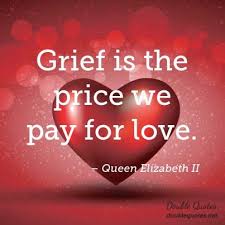
A truer statement I cannot find.  Grief is the price we pay for love.

Death is one of the most confusing emotions we experience. We don’t and can’t imagine a future without our loved ones and forever is not a time frame we can actually fully grasp. Unfortunately, death is a reality that will affect every single one of us. It is something that very few actually consider or anticipate. It doesn’t seem real until it happens to us. The sad reality is that people die every single day and it is devastating for those who love them. Whether it is a parent, grandparent, sibling, or friend, the pain cuts deep and can seem to leave a hole in our heart. Even if the death is expected, dealing with the death of a loved one is extremely difficult, but it becomes even more difficult when the death of a loved one is sudden and unexpected.

I know how devastating an unexpected loss can be. I lost my brother May 14, 2013, very unexpectedly. One day he was living and part of this earth, and the next day he was gone. It was a crippling shock. As sudden and as shattering as it was, the pain I felt was just as severe as the loss of my dad, which I had some time to prepare for.

With my dad, there was some time to struggle with the idea of him not being around anymore. With my brother, it was instantaneous. There was no time to prepare myself for his death. In an instant, he was gone.

When you expect a loved one’s death it’s like walking into a fighting ring to endure a severe, brutal beating. You know it’s coming but it still hurts like hell. When grief is unexpected, it’s terribly agonizing and you feel powerless. It simply takes longer to adjust after an unexpected death.

I lost my dad to leukemia. He was diagnosed in 1991. I didn’t find out he had leukemia until April of 2006. My parents chose to keep it to themselves. My dad never wanted anyone to view him as a sick man. He was honestly the strongest man I knew. He succumbed to his leukemia June 9, 2006.

Between the time people found out about my dad’s illness, and before he passed away, people came to visit him. My brother flew up from Florida to see him. There was some time for his loved ones to prepare and accept the solemn possibility of his death. Even though it was a possibility, and we had some time to prepare, everyone was still completely grief-stricken when he passed away. I still miss him to the core of my soul and still get very emotional but I have loving memories of a great man who is so deeply missed. There is no shocking, devastating wound. There remains a sad emptiness for a man who meant the world to me.

Though you may expect the death of a loved one, and the pain is different than unexpected death, it is still equally as deep. Though you may expect a loved one’s death, and you can get a jump start on your grieving process, you grieve just as deeply. Grief knows no boundaries.

A loss by suicide is considered an unexpected and sudden loss. Warning signs are not taken seriously and people truly don’t recognize them until the loss occurs. A loss to suicide is very different from any other form of death. An important thing to remember is that if you lose someone to suicide, you cannot hold yourself responsible for their actions. It is natural and normal to feel guilt but the reality of the matter is that they they chose their destiny. You did not choose it for them.

Unfortunately, any death is a horrible thing regardless of the manner in which we lose someone. However, suicide is a unique death and has a higher complexity of emotional waves than any other type of loss.

The bottom line is whether death is sudden or expected, grieving is very similar.  Yes, we all grieve differently but the coping mechanisms remain constant no matter how a loved one passed.

Some myths about grief are:

MYTH: The pain will go away faster if you ignore it.

Fact: Trying to ignore your pain or keep it from surfacing will only make it worse in the long run. It is necessary to face your grief and actively deal with it for healing.

MYTH: It’s important to be “be strong” in the face of loss.

Fact: Feeling sad, frightened, or lonely is a normal reaction to loss. Crying doesn’t mean you are weak. You don’t need to “protect” your family or friends by putting on a brave front.

MYTH: If you don’t cry, it means you aren’t sorry about the loss.

Fact: Crying is a normal response to sadness, but it’s not the only one. Those who don’t cry may feel the pain just as deeply as others. They may simply have other ways of expressing it.

And my all-time favorite:

MYTH: Grief should last about a year.

Fact: There is no right or wrong time frame for grieving. How long it takes can differ from person to person.

Even though it is an exhausting and painful process, and the bereaved experience intense emotions and symptoms after a loss, the majority emerge with their sanity and emotional health intact.

For more information about grief and healing, and for group support information as well as various ways to cope, I have provided some information and helpful websites:

Grief.com

American Foundation for Suicide Prevention

Journey of Hearts

Survivors of Suicide Loss

If you are presently grieving the loss of a loved one, please accept my condolences.  I pray that you find comfort from family and friends during this most difficult time of your life.

images-1.jpg

I am living proof that you DO survive grief, even though it may not seem it at the time.  I hope I was able to validate how you are feeling as well as give you hope in knowing that you too will survive your loss.  You are going to be okay.

Hugs.

Enter your email address to follow this blog and receive notifications of new posts by email.

Join 258 other subscribers
Follow Darielle Brooklyn on WordPress.com

Blog at WordPress.com.

  • Subscribe Subscribed
    • Darielle Brooklyn
    • Join 55 other subscribers
    • Already have a WordPress.com account? Log in now.
    • Darielle Brooklyn
    • Subscribe Subscribed
    • Sign up
    • Log in
    • Report this content
    • View site in Reader
    • Manage subscriptions
    • Collapse this bar
 

Loading Comments...